
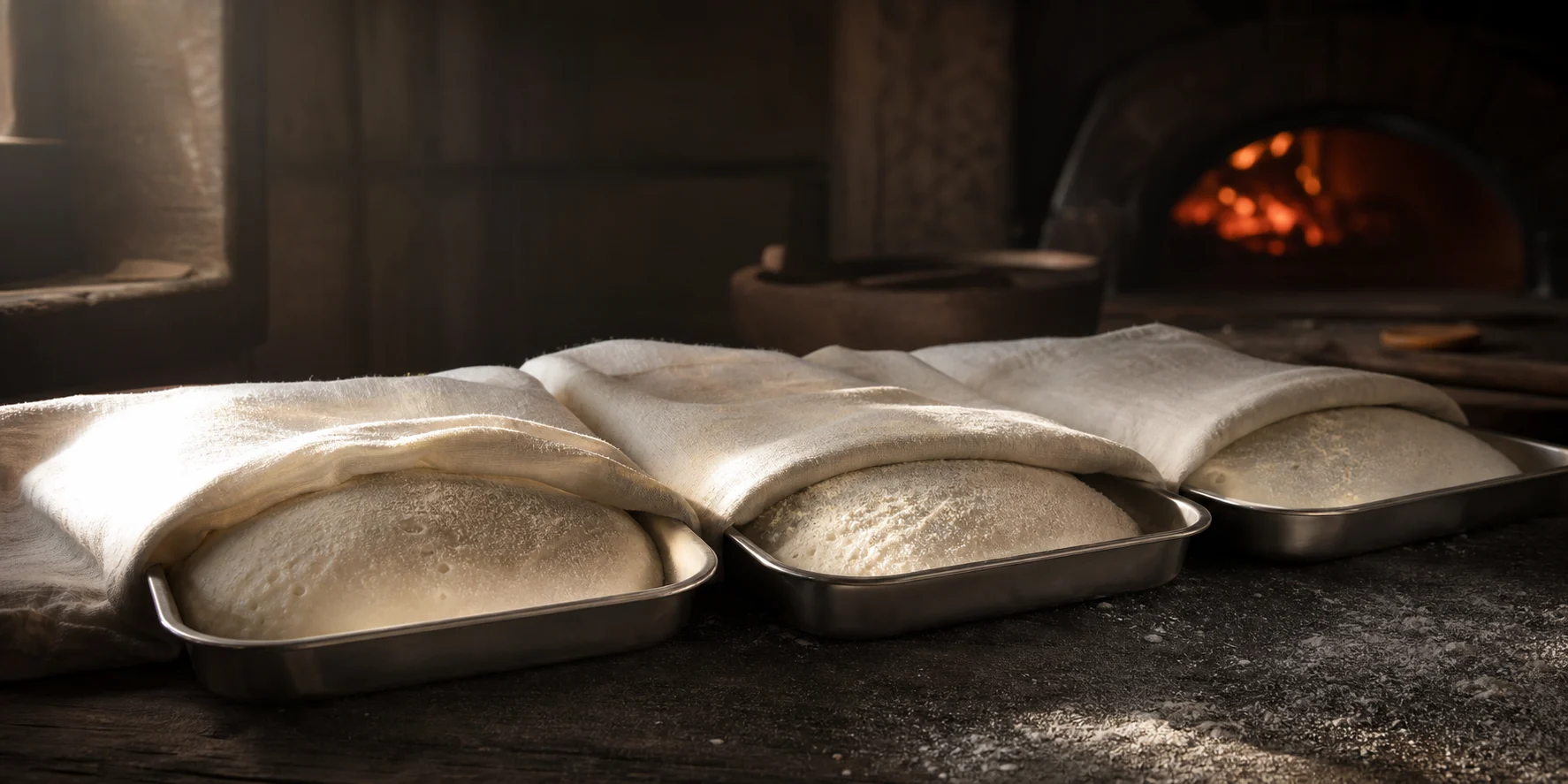
Long fermentation does more than create an airy rim; it builds the delicate balance between aroma, texture and digestibility.
Time is an ingredient
Flour, water, salt and yeast are visible ingredients; time is the quiet one. As dough rests, enzymes turn starch into simpler sugars, yeast works steadily and complex aromas develop. The process can appear easy to accelerate, yet adding more yeast never produces the same depth.
The dough, not the clock, decides
Fermentation cannot be reduced to a fixed number of hours. Flour strength, water temperature, humidity and the day’s changing warmth make the same formula behave differently. We therefore read surface tension, volume, aroma and the dough’s response to touch—not the stopwatch alone.
Texture reveals itself in the oven
When mature dough meets high heat, the rim rises quickly, internal gas cells expand and a delicate outer skin forms. The goal is not dry, brittle bread but a lively pizza with a thin centre, supple bite, retained moisture and gentle char.
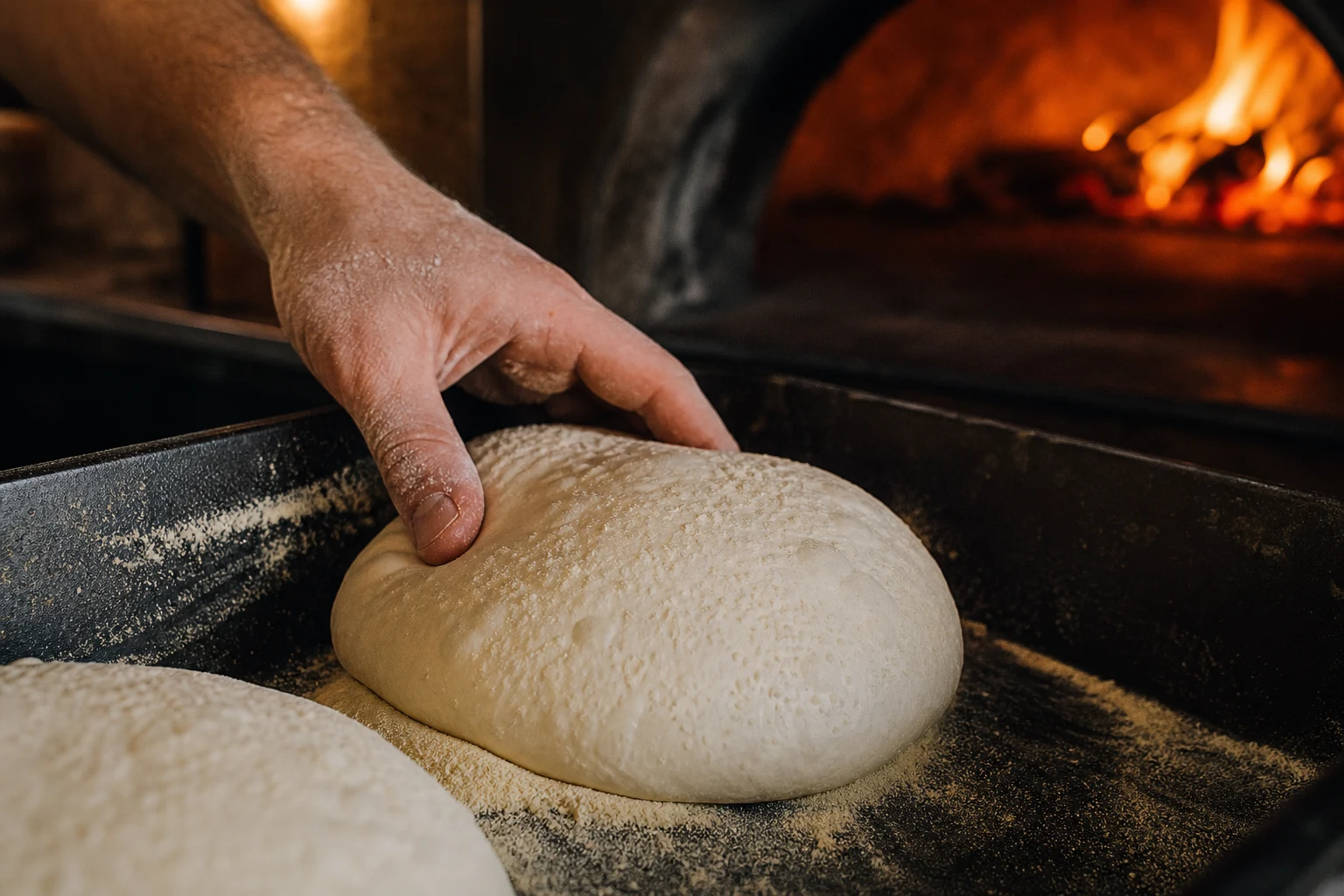
Patience becomes flavour
At La Savélia, long fermentation is not a marketing phrase but a daily production discipline. Every batch is recorded, adjusted to temperature and never forced to fit service. The result is clearer wheat aroma, a balanced bite and a pizza that leaves the table feeling light.
Cold does not stop the process; it shapes it
Cold fermentation slows the yeast and gives flavour time to layer, but a refrigerator alone cannot make good dough. Core temperature, tray position and the final rest must be read together. Dough approaching the oven should feel lively, supple and still hold surface tension. Too cold and it resists opening; too warm and it loses strength. Craft lies in finding the calm service window between those extremes.
What mature dough brings to the table
Properly matured dough is not defined by large air pockets alone. A fine crackle gives way to a moist, silky crumb; toasted grain, dairy and faint nutty notes remain audible beneath the sauce. The rim never tires the jaw and the centre still carries its topping. For us, the proof of long fermentation is not volume in a photograph but lightness and balance that survive to the final bite.